
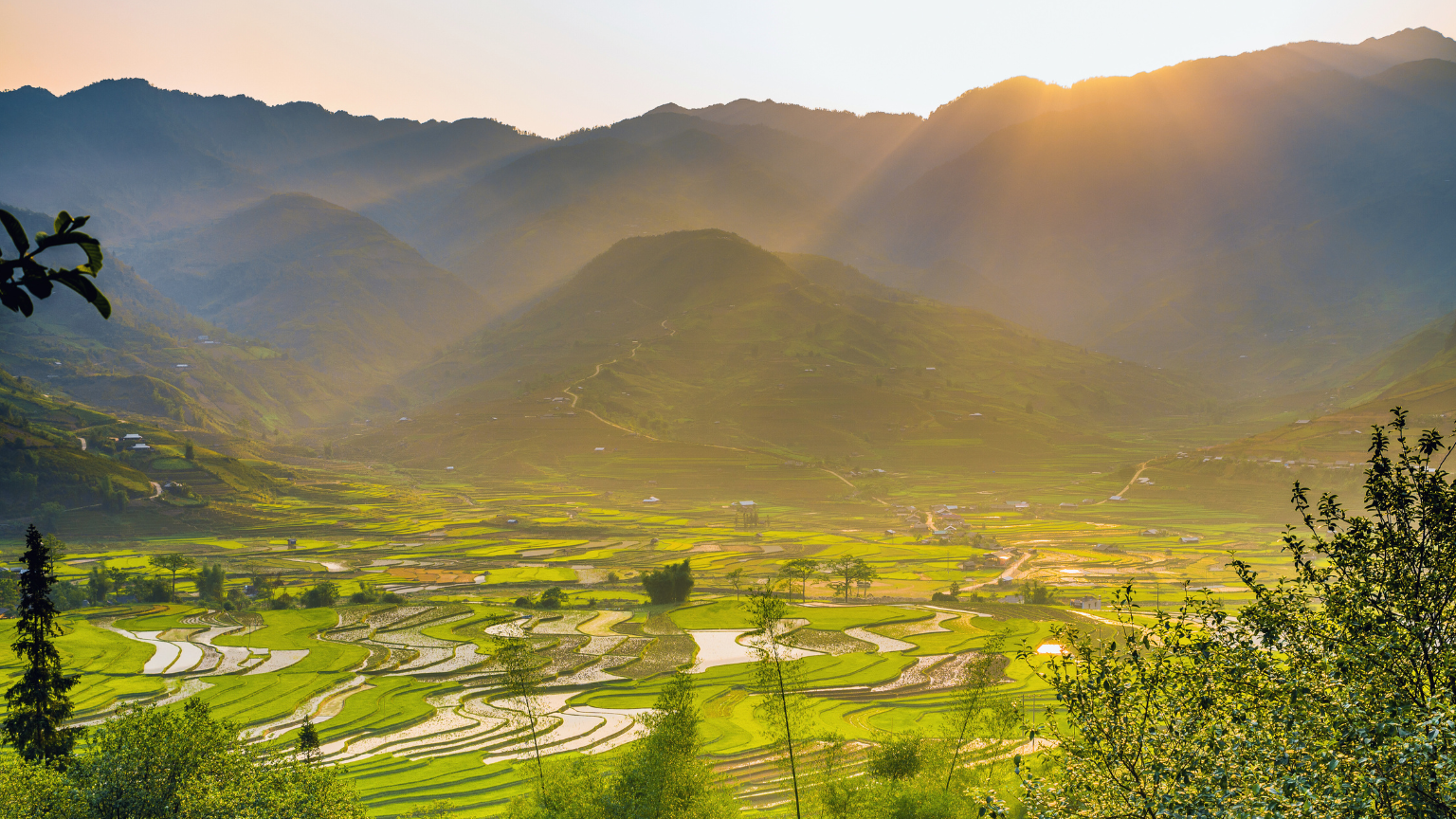

Vietnam's countryside is a tapestry of vivid landscapes and cultural richness waiting to be enjoyed. Beyond the hustle and bustle of the cities, the rural areas offer a glimpse into the heart and soul of Vietnamese traditions and ways of life. From terraced rice fields that change color with the seasons to ancient villages where time seems to stand still, exploring Vietnam's countryside is an adventure in cultural immersion.
1. Sapa (Where rice terraces paint the hills)

In the misty mountains of northwest Vietnam, Sapa is a breathtaking spectacle of nature intertwined with human ingenuity. The terraced rice fields, carved into the hillsides over centuries, create a mesmerizing patchwork of green, yellow, and gold during the harvest season. This area is not just a feast for the eyes; it's a living museum of the H'mong, Red Dao, and other ethnic groups' cultures. Visitors can trek through the hills to remote villages, experiencing firsthand the traditional lifestyles and customs. Sapa's vibrant markets, where locals don their colorful attire, offer an insight into the region's rich cultural tapestry.
2. Hoi An (An ancient town lit by lanterns)

Hoi An, with its well-preserved Ancient Town, is a portal to the past. The streets here are lined with centuries-old merchants' homes, tea warehouses, and chapels that tell tales of its vibrant history as a Southeast Asian trading port. At night, the town transforms as lanterns of every color light up, casting a magical glow over the Thu Bon River. Cultural festivals and traditional workshops abound, offering visitors a chance to dive into the local heritage, from lantern making to boat building. Hoi An's blend of indigenous and foreign influences has created a unique cultural identity that enchants every visitor.
3. Mekong Delta (Life on the water)

The Mekong Delta is a labyrinth of rivers, swamps, and islands where life flows to the rhythm of the water. Here, boats, houses, and markets float upon the vast network of waterways that crisscross the landscape. This "rice bowl" of Vietnam is not only crucial for its agricultural output but also for its cultural vibrancy. By taking a boat tour, visitors can observe the daily routines of fishing, rice farming, and fruit cultivation. The floating markets, where trade has been conducted for centuries, offer a colorful glimpse into local life and traditions.
4. Hue (The imperial city's legacy)

As the former capital of Vietnam's last ruling dynasty, Hue holds a special place in the country's history. The Imperial City, with its palaces and shrines, is a testament to the grandeur of the Nguyen emperors. Beyond these monumental structures, Hue's countryside is dotted with ancient tombs and pagodas set amidst picturesque landscapes. Cultural festivals such as the biennial Hue Festival bring the city's heritage to life with performances, martial arts, and traditional music. Hue's cuisine, renowned for its sophistication and variety, offers another layer of cultural discovery.
5. Mai Chau (A serene valley of culture)

Mai Chau is a peaceful valley surrounded by rolling hills, a stark contrast to Vietnam's bustling cities. This area is home to the White Thai ethnic group, known for their stilt houses and vibrant textiles. Visitors can stay in local homestays to experience community life, from rice planting to weaving. The Sunday market is a social highlight, where locals come together to sell handmade goods, from colorful fabrics to traditional foods. Mai Chau provides a tranquil setting for those looking to immerse themselves in the simplicity and beauty of rural Vietnamese culture.
This article was written by Hunter and edited with AI Assistance