
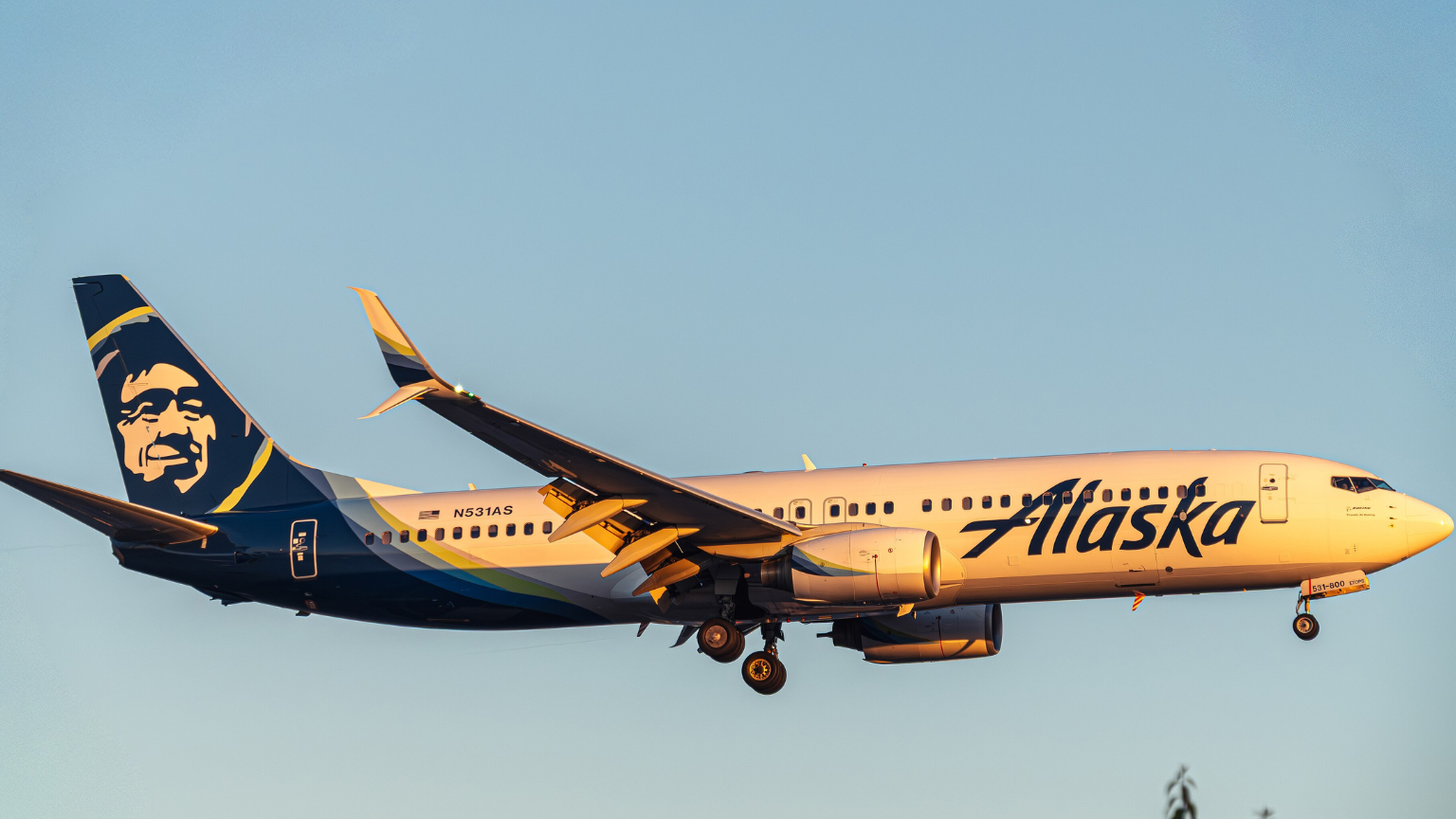

Alaska Airlines has started describing itself as the United States’ fourth global airline, and the timing is not random. Since Alaska Air Group bought Hawaiian Airlines in 2024, the company suddenly has long haul aircraft and a much bigger international runway. Analysts generally like the direction Alaska is heading, especially the way it is reshaping its network around Seattle. But many also say the “global airline” label still feels a step ahead of the reality on the ground. The simplest critique is that Alaska’s core footprint is still heavily West Coast, and that creates limits when you try to compete with true network giants. In other words, Alaska may be building global reach, but some experts argue it is not yet a global carrier in the way travelers usually understand that term.
A Big Vision, but a Regional Core
One aviation consultant described Alaska as “a large regional airline with global reach,” which captures the tension well. Alaska is expanding, and its ambitions are clearly bigger than a typical regional focused carrier. But its strongest markets remain the Pacific Northwest and parts of California, and that concentration matters. The argument is straightforward: if an airline is not broadly national in its route network and customer base, it is harder to call it global in a meaningful way. Flying long haul routes is a major milestone, but global carriers tend to have large, balanced domestic networks that feed their international flights from many directions, not just one corner of the country.
The Post Merger Strategy Focuses on Seattle, Portland, and San Diego
Executives mapped out Alaska’s plan in late 2024, and it has three main pillars. First, grow flying in San Diego. Second, strengthen Portland as a core market and connecting point. Third, transform Seattle into a true global gateway that can go head to head with Delta’s international reach.
Those moves are already taking shape. Alaska plans a sizable increase in San Diego flying this spring, aiming to challenge the market leader there. In Portland, where Alaska already holds a strong position, the airline is also scheduled to grow significantly compared to both 2025 and 2024. The company has been able to do this in part by pulling back in places where its share is weaker, especially in the crowded San Francisco and Los Angeles markets. By reducing flying in those tougher arenas, Alaska has freed aircraft to double down where it believes it can win.
More Planes, More Flexibility, and a Bigger West Coast Hub Play
Alaska is also building toward expansion with a much larger narrowbody pipeline. The company has expanded its Boeing narrowbody orders to a total of 245 aircraft, including a major order for Boeing 737 Max 10 jets announced in January. The Max 10 is the largest version of that aircraft family, and Alaska sees it as a way to grow capacity efficiently in places where gate space is limited.
Seattle is a prime example. When gates and airport space are tight, the easiest way to carry more passengers is not always adding more flights. It can be using larger aircraft on the same number of departures. Alaska also expects these larger narrowbodies to support Portland’s role as a connecting hub as the airline pushes for more network scale.
The Hawaiian Deal Opened the Door to Long Haul
The biggest shift from the Hawaiian acquisition is widebody aircraft. Before that deal, Alaska did not operate widebodies at all, which naturally capped how far it could expand internationally under its own brand. Hawaiian brought a fleet of Airbus A330 200 aircraft and a growing group of Boeing 787 9 Dreamliners. Alaska now has a small number of 787s in hand and more on order, and those planes are central to its long haul strategy.
Alaska’s stated goal is to operate at least 12 long haul routes from Seattle by 2030 using Dreamliners. Some international routes are already flying, and more are scheduled to start in the spring, including several high profile destinations in Europe and the North Atlantic. On paper, that looks like a global airline trajectory, especially for a company that historically focused on domestic and regional flying.
International Growth Also Depends on Partners
Alaska’s strategy is not only about flying its own long haul routes. It is also leaning hard on international connectivity through alliance partners. That matters because global airline strength is often measured not just by where you can fly nonstop, but also by how easily you can connect onward to dozens of cities beyond a main gateway.
For example, Alaska has discussed plans to expand its codeshare reach beyond London with a large set of partner connections, pending regulatory approvals. This kind of partnership driven connectivity can make an airline feel global to customers, even before it has the aircraft to serve every region directly.
Why Global Reach Matters for Loyalty and Corporate Business
Analysts say Alaska’s global push is not just about branding. It is tied directly to high margin parts of the airline business, especially loyalty programs and co branded credit cards. In the U.S. airline industry, those revenue streams can be huge profit drivers, and scale matters. Frequent flyers tend to stick with airlines that can take them not only around the country, but also to major international business and leisure markets.
Global connectivity also plays a major role in winning corporate accounts. Many business travel programs want an airline that can handle domestic trips, international trips, and partner connections without forcing travelers to constantly switch carriers. If Alaska wants to become a powerhouse hub airline in Seattle, it needs to serve the kinds of major global markets corporate travelers expect.
A Unified Loyalty Program Is Part of the Push
To build momentum, Alaska combined the Alaska and Hawaiian loyalty programs into a single program called Atmos Rewards. The company has also pointed to strong growth in credit card signups recently, crediting both the launch of a premium card and the excitement around international expansion. The idea is clear: if Alaska can sell a bigger travel world to its members, it can grow loyalty faster and monetize that loyalty more effectively.
The Competitive Reality in Seattle Is Brutal
Even with the plan in motion, analysts warn that Seattle is an extremely tough battleground. Alaska is not only competing with Delta’s international network there, but also with a long list of foreign carriers. One key complication is that Delta’s Asian partnerships add strength and feed, and several major international airlines have been investing in widebody growth over the past couple of years. Against that backdrop, Alaska’s current widebody scale still looks modest.
That does not mean Alaska cannot succeed. But it does mean the climb is steep, and there is little margin for missteps if the airline wants to build a Seattle gateway that feels truly global rather than selectively international.
Does Alaska Need Another Merger to Become Truly Global?
This is where the debate gets sharper. Some analysts argue Alaska’s identity will still look like a West Coast airline even five years from now unless the company makes another major acquisition. The reasoning is that to compete with the biggest U.S. network airlines, Alaska needs more scale, more domestic feed, and a broader geographic footprint. Expanding long haul routes from Seattle helps, but it does not automatically turn a West Coast heavy network into a national one.
One analyst suggested JetBlue as the most logical merger target if Alaska decides to make another move. The fit is obvious on paper. JetBlue has strength on the East Coast, in Florida, and across parts of the Caribbean, plus a small collection of transatlantic routes from Boston and New York. That kind of network would immediately change how people view Alaska’s geographic footprint and could supercharge its loyalty and credit card ambitions.
The Bottom Line
Alaska Airlines is clearly building toward something bigger, and the Hawaiian acquisition gave it the aircraft and the runway to start thinking long haul in a real way. Seattle is becoming the center of a more international strategy, and growth in Portland and San Diego shows Alaska is also tightening its grip where it already has strength. But calling itself a global airline is still a bold claim when its domestic footprint remains concentrated and its widebody scale is still relatively small. In the near term, Alaska may best be described as an airline with growing global reach rather than a fully formed global carrier. Whether it becomes a true global competitor may come down to two things: how successfully it builds Seattle into a long haul gateway, and whether it makes another major acquisition to broaden its national base.
Follow us on MSN for all your travel and lifestyle tips.
This article was written by Hunter and edited with AI Assistance